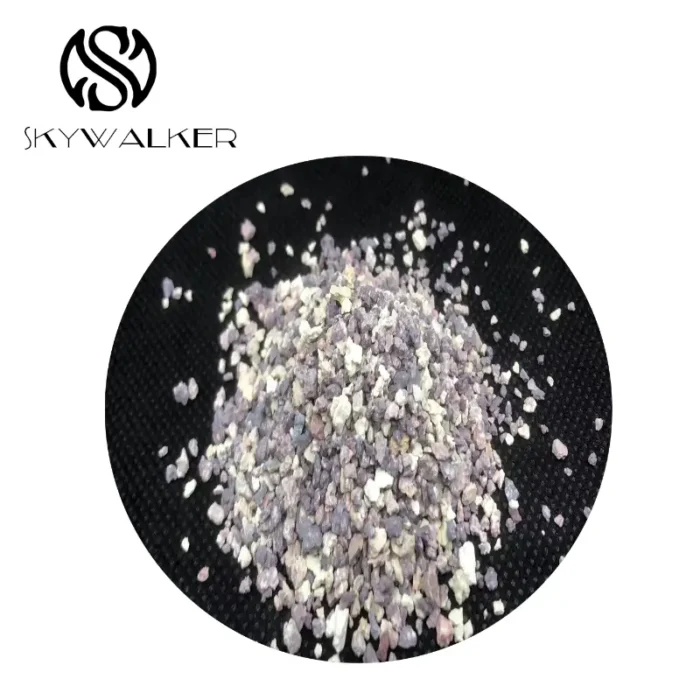
Why is diatomaceous earth filter aid trusted for mission-critical filtration steps?
Warm regards,
Historic grain, regularly named sediment powder, epitomizes a extraordinary natural filtration strategy. Obtained from the fossilized remains of microscopic aquatic vegetation, this granular material boasts a unique structure – millions of tiny, empty chambers creating a immense surface area. This pattern provides exceptional purifying capabilities, effectively removing residues from solutions. It’s a innocuous and environmentally friendly preference to man-made filters across various areas, including pool filtration, beverage processing, and agricultural systems.
Earthy Filter Element: An Elaborate Description for Clearer Outputs
Accomplishing lucid clarity in your refinement efforts often utilises effective straining methods. Diatomite filter aid, a versatile natural component, offers a impressive improvement, acting as a layer to retain sediments that would otherwise pass through your filter. This guide will analyze how diatomaceous earth – often simply called diatomite – works, its numerous applications in beverage production, and effective tips for paramount performance. Proper deployment of diatomite can dramatically augment the grade of your final yield, leading to remarkable taste and finish.
Understanding Kieselguhr: Benefits, Upsides, and Safety
Fossilized earth, termed diatomaceous compound, is a naturally occurring sedimentary material composed of the fossilized remains of unicellular algae. It's primarily constituted of silicon dioxide, or silica, and has a remarkably porous structure. This unique composition lends itself to a assortment of applications across numerous areas. Here's a look at its roles:- Refinement: Extensively employed in cleaning systems and ale crafting to remove foreign substances.
- Arthropod Suppression: Acts as a natural insecticide by damaging the exoskeletons of insects.
- Buffing: Employed as a gentle abrasive in cleaning compounds.
- Medicine & Food: Can be found in anticaking ingredients and binders in certain preparations.
Deciding on each Ideal Filtering Aid Powder: Pointers with respect to A Application
Electing that optimal filter aid powder class is paramount to perform ensuring reliable purification in their procedure. Consider intensely variables particularly particle size, flow speed, cake development, and chemical reaction with the mixture. Regular forms encompass diatomaceous powder, perlite and cellulose strands, each providing separate performance properties. Accurate appraisal of these details will aid you select most most matching filtration aid method.
DE vs. Varied Filtration Agents: Which is Best?
At the Time appointing a separation aid for your function, several selections exist beyond merely siliceous earth. While diatomaceous earth remains a prevalent solution due to its small particle extent and excellent clarification competencies, replacements like expanded perlite and organic threads afford unique positives. At last, the finest decision counts on factors particularly cost, performance, conformity with your targeted liquid and the required quality of separation.
Diatomite Insights: Makeup and Screening Qualities
Silica Residue is a singular sedimentary material formed from the fossilized remains of microscopic plants. These minuscule organisms possess intricately crafted silica exoskeletons, termed shells, exhibiting a permeable structure with a network of microscopic pores and passages. Such architecture grants siliceous sediment its exceptional purification capabilities; the considerable surface area and connected pore extent allow it to effectively seize distributed matter from moist mediums and exhalations. Subsequently, it's universally utilized in countless filtration operations, including hydrous matter purification, potable drink straining, and healthcare production.Conservation Filtration: Probing Silica Sediment Choices Innovations
Surging concerns with regard to hydrated substance sanitation and planetary footprint are fueling a search for novel straining processes. Single notably intriguing fix involves siliceous sediment, a intrinsically emerging sedimentary material composed of the imprints of very small algae. As opposed to common filtration frameworks that commonly use on synthetic parts, diatomaceous DE offers a eco-friendly alternative. Its singular elaborate structure creates a significantly powerful screen capable of taking out a large spectrum of toxic particles from different liquid holdings.
Think about some benefits of using diatomaceous DE in screening:
- Grants outstanding refining productivity.
- Is planet-friendly safe.
- Embodies a budget-friendly strategy.
- Is able to be harnessed for numerous applications.
Custom Pool & Pond Cleaning: Using Fossil Powder
Aspire for diatomite filter aid a sparkling pool or pond devoid of costly chemicals? Reflect on using diatomaceous earth! This biogenic powder is a robust filter agent. It works by eradicating tiny residues and other impurities from the body of water. It’s easy to add it directly to your bathing spot or use it in a DIY pool cleaning mechanism. Continually use filter-grade diatomaceous earth, as other types can be hazardous to natural biota. Here's how it can help:
- Eliminates aquatic vegetation
- Raises visibility
- Supplies a chemical-free alternative to harsh solutions
Traveling From Planet to Sieve: The Travel of Sedimentary Silica
Believe a powder seemingly basic, yet manufactured over epochs – that’s diatomite. It springs as the skeletons of microscopic plants, diatoms, that prosper in pure inland waters. When these microscopic creatures decompose, their silica-rich cell structures settle to the base of the mass of water, collecting over wide periods. These beddings are then submerged under folds of ancillary sediment, enduring to substantial pressure and heat. Finally, this rock is mined, processed, and transformed into the versatile filtering agent we recognize as diatomite.